Mark out the working envelope
Before buying cabinets, park the motorcycle where you expect to maintain it. Allow for the handlebars turning, a stand handle moving through its full arc and a person reaching both sides. Open nearby doors and drawers. A layout that works with everything shut may fail as soon as you bring in a drain pan or remove a seat.
Keep a continuous route to the exit. Do not make stepping over a charger cable or squeezing past a hot exhaust part of the routine. If the garage serves several purposes, mark the motorcycle bay and the access route with removable floor tape. The aim is a visible boundary, not a decorative parking box.
Use three simple zones
A useful workshop separates clean preparation, the motorcycle working area and controlled storage for dirty or hazardous materials. These zones can be small. Their value comes from keeping loose fasteners out of cleaning water and keeping chemical containers away from a battery charger, heater or other ignition source.
Choose storage by weight and frequency
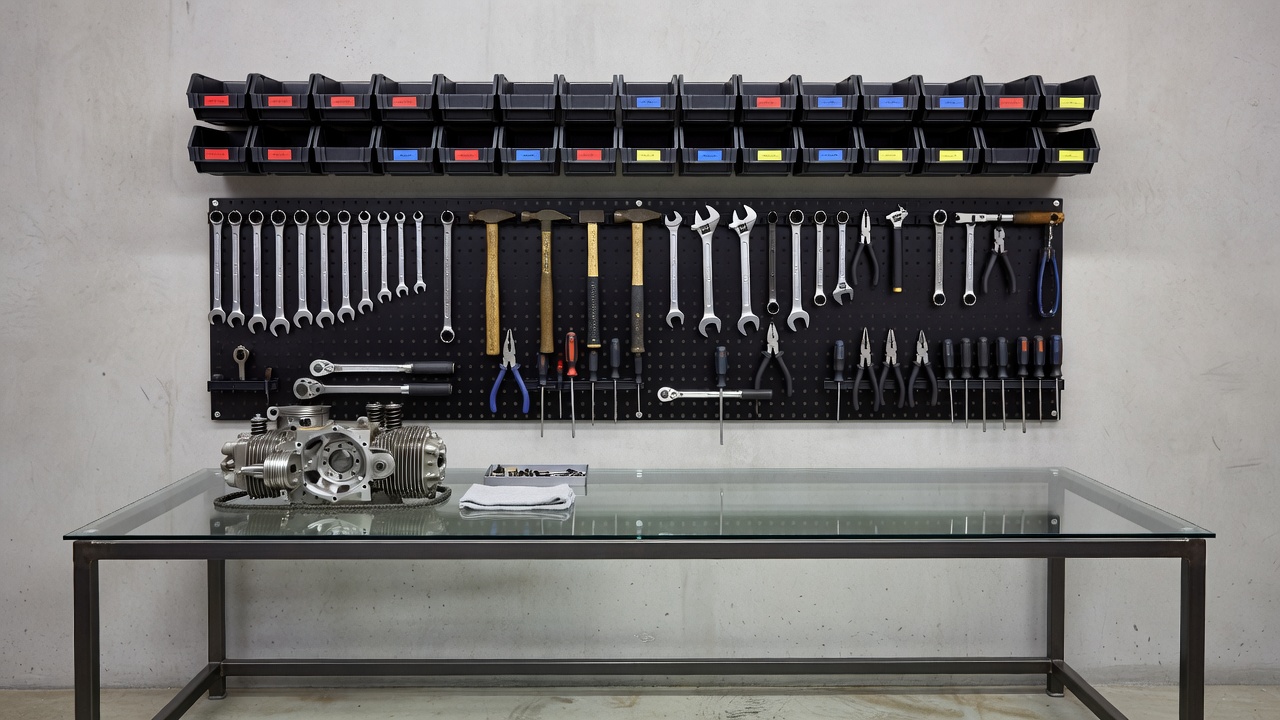
Heavy tools and fluid containers belong low, on shelving rated for their load. A wall panel is useful for light hand tools, but the fixings must suit the wall construction and the intended load. Do not assume plasterboard anchors are suitable for a loaded cabinet. If you cannot verify the structure, use a suitable floor-standing unit or seek competent installation advice.
Keep sockets in indexed rails or trays so missing pieces are obvious. Use shallow compartments for washers and clips, and label dismantled parts by assembly. Photograph cable routing and fastener positions before disassembly. A tray marked “left fairing” is more useful than a single container filled with every bolt removed that afternoon.
Review your garage essentials
Buy equipment in the order that removes the most immediate obstacle. Lighting and secure storage often improve the work more than another power tool. This checklist is a planning aid; it is not a statement that a space is safe for every maintenance task.
These ticks last only while the page remains open. Print the page if you want a workshop copy.
Control light, air and ignition sources
Use broad lighting to reveal spills and a movable task light to see recessed fasteners. Position the light so your hands do not cast a shadow over the inspection point. Electrical equipment and extension leads must suit the environment; have questionable garage wiring checked by a qualified electrician.
Never run a combustion engine in an enclosed garage. An open door is not a dependable carbon-monoxide control. Move the motorcycle outdoors before running it, and avoid directing exhaust toward doors, windows or people. Do not work near fuel vapors with equipment that can spark. Read product safety data and keep appropriate fire-safety arrangements for the materials you store.
Make cleanup part of the job
Provide a spill tray before opening a fluid container. Keep used oil, coolant and brake fluid separate unless your local waste service explicitly instructs otherwise, and take them to an authorized collection point. Never discharge workshop liquids into soil or drains. Store oily materials and contaminated cloths according to the product warnings and local fire guidance.
At the end of a session, account for tools, remove waste, close containers and write down unfinished work. A note on the handlebar can prevent a motorcycle with an incomplete repair from being ridden. If a brake, wheel or steering task is unfinished, make that status unmistakable rather than relying on memory.